


What Areas Around Brisbane Do You Service for Live Streaming? Livestream Co’s Coverage Map, Zones & Booking Availability
You are planning a wedding, farewell, or quarterly briefing and you are asking what areas around brisbane do you service for live streaming. This guide explains exactly where Livestream Co. operates, how our zones work, and what to expect for booking and availability in and around Brisbane. Because our Local Brisbane-based crew with fast setup and on-site support can be mobilised quickly, you gain a reliable partner that is as comfortable in the Brisbane CBD (Central Business District) as we are in hinterland chapels, sports ovals, or bayside parks. Along the way, you will find a clear coverage map in words, practical checklists, and realistic timeframes so you can make a confident decision fast.
Many families and organisations need a professional-grade stream that feels personal, secure, and dependable, even when guests cannot attend in person. With high-definition (HD) options — from single-camera packages to multi-camera setups available as part of our Premium/Comprehensive packages or as add-ons — discreet audio for solemn moments, and delivery to YouTube, Facebook, Zoom, and Microsoft Teams (MS Teams), Livestream Co. bridges distance and schedules. And because we plan coverage by zone, we can give you an accurate arrival window, the right gear for the venue, and redundancy options such as bonded cellular over Long-Term Evolution (LTE) 4G/5G and Starlink satellite where required. Ready to see if your suburb is included? Let’s map it out.
What Areas Around Brisbane Do You Service for Live Streaming?
Short answer: across Greater Brisbane and the surrounding regions, including the inner city, northside, southside, bayside, and western corridors, plus regular runs to the Gold Coast and Sunshine Coast. Think of our service area as concentric rings around the Brisbane CBD (Central Business District), with fast arterials along the M1, M3, and Bruce Highway allowing rapid deployment. If your venue is reachable by sealed road and has at least minimal mobile coverage or venue internet, we can usually stream it with professional quality and on-site support.
Here is a practical view of the places we visit most for weddings, funerals and memorials, corporate events, education sessions, and sporting fixtures. If you do not see your suburb listed, ask us anyway. The list is indicative rather than exhaustive. Short‑notice requests may be possible when crews are nearby, but availability is subject to crew schedules and travel constraints.
- Inner Brisbane: City, South Bank, West End, Fortitude Valley, New Farm, Teneriffe, Kangaroo Point, Bowen Hills, Milton, Auchenflower, Toowong.
- North and Moreton Bay Region: Windsor, Lutwyche, Chermside, Aspley, Everton Park, Enoggera, Kedron, North Lakes, Mango Hill, Redcliffe, Scarborough, Deception Bay, Caboolture.
- South and Logan: Woolloongabba, Annerley, Greenslopes, Mount Gravatt, Sunnybank, Eight Mile Plains, Underwood, Springwood, Logan Central, Beenleigh, Yatala.
- East and Redlands Coast: Coorparoo, Morningside, Cannon Hill, Carindale, Tingalpa, Wynnum, Manly, Capalaba, Cleveland, Alexandra Hills, Victoria Point, Redland Bay.
- West, Ipswich and Springfield: Indooroopilly, St Lucia, Taringa, Jindalee, Oxley, Sinnamon Park, Darra, Springfield Lakes, Brookwater, Ripley, Ipswich.
- Regular Regional Runs: Gold Coast corridor (Pimpama to Broadbeach to Coolangatta), Sunshine Coast corridor (Caloundra to Maroochydore to Noosa), Scenic Rim (Tamborine Mountain, Canungra, Beaudesert), Somerset and Lockyer Valley (Esk, Gatton) by quotation.
| Zone | Distance from Brisbane CBD (Central Business District) | Examples | Typical Travel Time | Same-Day Booking Window | Travel Surcharge |
|---|---|---|---|---|---|
| Zone A | 0–20 km | City, South Bank, West End, Milton, Toowong, Coorparoo, Chermside | 20–45 minutes | May be available with 3–6 hours notice, subject to crew schedules and travel | None |
| Zone B | 20–40 km | North Lakes, Redcliffe, Capalaba, Victoria Point, Logan Central, Springfield | 35–70 minutes | May be available same day, subject to crew routing and availability | Low |
| Zone C | 40–80 km | Caboolture, Ipswich, Beenleigh, Tamborine Mountain, Cleveland hinterland | 60–110 minutes | Possible; confirm in advance | Standard |
| Zone D | 80–150 km | Gold Coast, Sunshine Coast, Scenic Rim, Somerset, Lockyer Valley | 90–150 minutes | By request; depends on schedule and crew location | Quoted |
What Is Livestream Co’s Brisbane Coverage Map and How Do Zones Work?
Our coverage map is a practical planning tool that ties travel time, crew allocation, and network strategy to your venue’s location. Instead of promising the impossible, we assign every booking to a zone and then match it with a kit that suits the venue type, the event format, and the available connectivity. In Zone A, urban density usually ensures robust 4G/5G (Fourth Generation/Fifth Generation) mobile data and venue internet, so a compact fast-setup rig with bonded modems and standard streaming equipment is often sufficient. In outer zones or semi-rural settings, we scale redundancy: multi-carrier bonding, additional connectivity options such as Starlink where available, and additional audio capture to handle wind or crowd noise.
Watch This Helpful Video
To help you better understand what areas around brisbane do you service for live streaming, we’ve included this informative video from The Big Bash. It provides valuable insights and visual demonstrations that complement the written content.
Think of zones like lanes of a highway for logistics. The closer the lane, the faster we can arrive and the more flexible we can be with last-minute changes. The further the lane, the more we pre-plan to guarantee a rock-solid stream. Because Livestream Co. offers both respectful, discreet funeral coverage and energetic multi-camera sports setups, our zone system also helps us send the right people. A memorial at a bayside chapel benefits from a caring, minimal-footprint approach with lavalier microphones; a tournament at Redcliffe or Springfield might need elevated cameras, talkback headsets, and redundant connectivity. Either way, you get the same caring, professional team and a plan designed to work in your zone.
| Venue Connectivity | Our Primary Method | Fallback and Redundancy | Notes |
|---|---|---|---|
| Reliable fiber or National Broadband Network (NBN) Ethernet | Direct streaming via Real-Time Messaging Protocol (RTMP) | Bonded cellular over Long-Term Evolution (LTE) 4G/5G, local recording | Lowest latency and most stable when available |
| Variable Wi-Fi (wireless fidelity) | Bonded cellular as primary | Redundant connectivity, on-site router prioritisation, local recording | We avoid public Wi-Fi except as tertiary path |
| No venue internet | Multi-carrier bonded cellular | Local recording with rapid upload post-event | 99 percent of suburban Brisbane covered by at least one carrier |
Why Does Coverage Matter for Your Event Stream?
Coverage matters because reliability is not a coincidence; it is engineered before we arrive. The nearest tower, local congestion during peak hours, and even the building’s construction materials can influence signal behaviour. A local Brisbane-based crew knows these patterns street by street, from South Bank convention halls to heritage churches in Ipswich, and plans accordingly. That means choosing the right antennas for Long-Term Evolution (LTE) 4G/5G, requesting a hardline from the venue when possible, or shifting the stream protocol to Secure Reliable Transport (SRT) or Real-Time Messaging Protocol (RTMP) to match conditions. Industry reports show live viewing grows every year, and viewers are less forgiving of buffering than of minor camera imperfections. Clear audio and a continuous feed are what keep people engaged.
Coverage also shapes the human experience. When your grandparents cannot travel to the Gold Coast or your sales VP (Vice President) gets stuck interstate, a resilient stream maintains the social and business fabric. Event industry benchmarks indicate that hybrid events regularly draw higher total attendance and richer post-event engagement than in-person-only formats. That is because live chat, remote Q and A (questions and answers), and instant replays extend the room. For solemn moments, privacy is paramount, so we employ unlisted links, password protections, and discreet camera placements. For sports, we bring multi-angle clarity and commentary-ready audio. In every case, a well-thought-out coverage plan prevents preventable issues and turns your event into a shared moment, not a missed opportunity.
- According to multiple industry analyses, global live streaming viewership has grown by more than 20 percent year on year, and average watch time per live event exceeds 25 minutes.
- Carrier coverage maps indicate more than 90 percent of the Australian population is served by at least one 4G/5G (Fourth Generation/Fifth Generation) network, with multi-carrier bonding improving resilience markedly.
- Event benchmarks show hybrid formats can increase total attendance by 30–40 percent compared to in-person only, thanks to remote access and on-demand recordings.
How Does Short-Notice Booking and On-Site Setup Work?
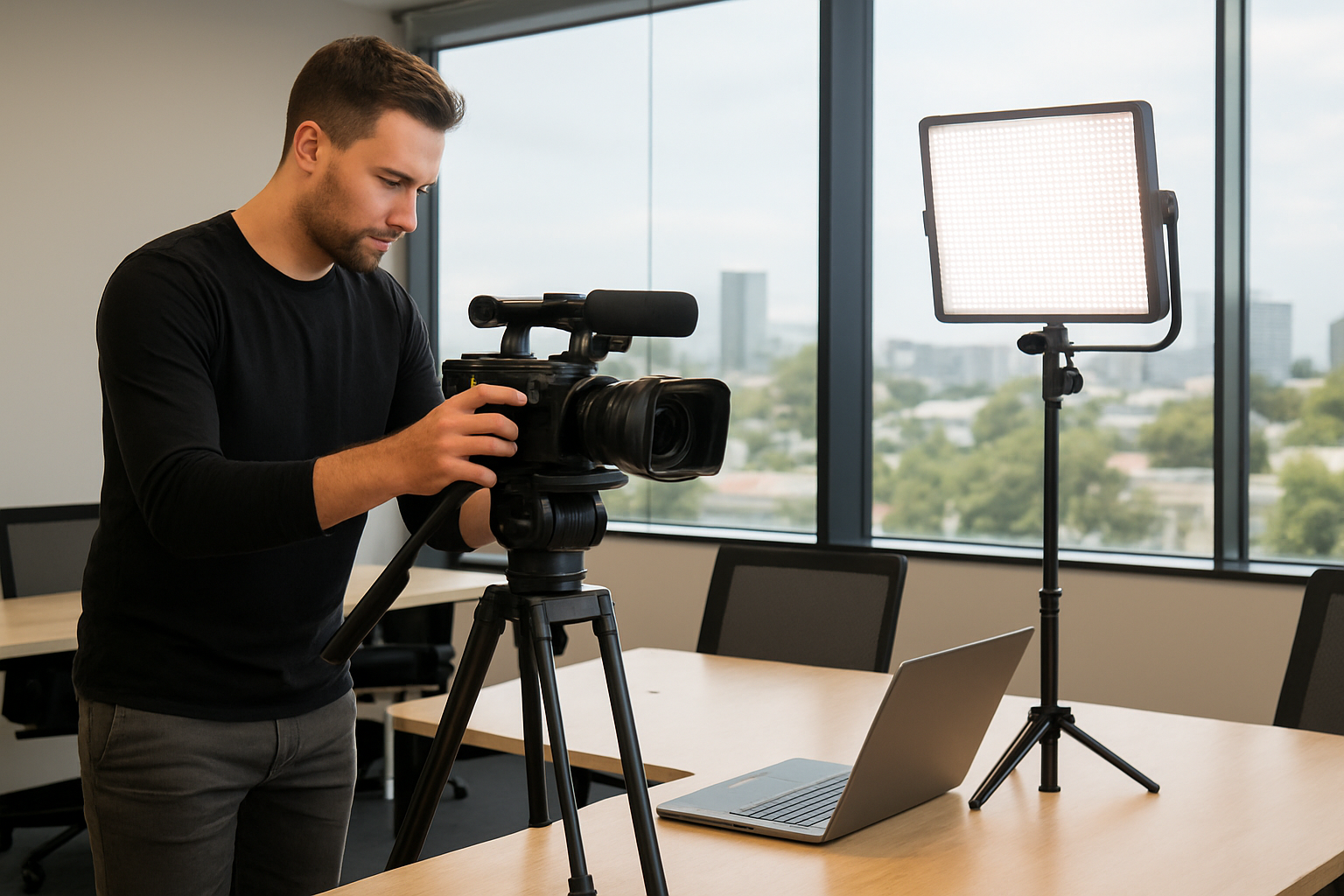
Short-notice booking is a team sport, and our Brisbane-based logistics make it possible more often than you might expect. The moment you contact Livestream Co., our dispatcher checks the zone, crew locations, traffic conditions, and the event type to confirm feasibility. For Zone A and many Zone B jobs, we may be able to accept bookings with 3–6 hours notice, subject to crew schedules. Zone C and Zone D are evaluated case by case, and we will be honest if arrival or testing time would be compromised. Either way, you receive fast guidance, a clear quote, and a provisional schedule within minutes, not hours. Because our kits are modular and pre-configured, we can swap a single-camera HD (high definition) funeral rig for a multi-camera unit with talkback headsets in under 20 minutes at the depot.
On-site, our fast setup process prioritises the audience experience and your comfort. We typically arrive 60–90 minutes before go-live, conduct a quick signal survey, and configure bonded connections. Audio is checked first, because intelligibility drives satisfaction; then cameras are framed, colour balanced, and white-balanced for the venue’s lighting. We stream in Full High Definition (Full HD) or Ultra High Definition (UHD) 4K (ultra high definition) when appropriate, simulcasting to YouTube, Facebook, Zoom, and Microsoft Teams (MS Teams) or a private unlisted link. Our tech-forward solutions include redundant connectivity options, local recordings, and Open Broadcaster Software (OBS) scene automation for polished transitions. After the event, we provide a downloadable archival file and, if requested, a trimmed edit or caption file to assist with accessibility.
- Enquire: Share the address, date, start time, audience size, and platforms you prefer.
- Confirm: We assign a zone, confirm crew availability, and send a clear proposal.
- Pre-flight: We assess connectivity options and plan the primary plus fallback path.
- Setup: Crew arrives, runs audio and camera checks, and verifies streaming destinations.
- Go live: We monitor bitrates, audio levels, and chat, with on-site support throughout.
- Wrap: We debrief, share the recording link, and arrange any edits or captions.
| Event Type | Typical Camera Plan | Audio Approach | Privacy Options | Delivery Platforms |
|---|---|---|---|---|
| Weddings | 1–2 cameras, plus Pan-Tilt-Zoom (PTZ) for aisle/altar | Lavalier and discreet boundary mics | Unlisted links, password on request | YouTube, private link, Facebook |
| Funerals and Memorials | 1–2 cameras, low footprint | Speech-optimised microphones, minimal cabling | Private link, restricted chat | Private page, Vimeo or YouTube unlisted |
| Conferences and Seminars | 2–4 cameras, slides capture, picture-in-picture | Stage feed plus room mics | Registration gates, protected pages | Zoom, Microsoft Teams (MS Teams), YouTube |
| Sporting Matches | Multi-camera with elevated angle | Commentary headset and effects mics | Ticketed or public streams | YouTube, Facebook, private portals |
Common questions
Do you travel to the Gold Coast and Sunshine Coast?
Yes. We service Gold Coast and Sunshine Coast venues regularly, from beach ceremonies to hotel ballrooms. These are typically Zone D bookings and are confirmed based on crew routing and event timings.
Can you stream from parks, beaches, or rural properties?
In most cases, yes. We bring bonded cellular across multiple Long-Term Evolution (LTE) 4G/5G carriers, wind protection for microphones, weather covers for equipment, and battery backups. Starlink is also available for remote locations where needed. If coverage is truly absent, we record seamlessly and upload immediately after.
What if the venue’s Wi-Fi (wireless fidelity) is weak?
We default to bonded cellular as the primary path when venue internet is unreliable. Where possible, we also request a National Broadband Network (NBN) Ethernet handoff for redundancy and keep local recordings as a safety net.
How many cameras do I need?
Most intimate ceremonies are beautiful with one or two cameras. Conferences, concerts, and sport benefit from two to four angles. We advise based on your objectives, room size, and the platforms you will use.
Do you offer respectful, discreet coverage for funerals and memorials?
Yes. Our team is trained for low-profile, compassionate operation, with minimal gear footprint, quiet cabling, and private stream links so only invited people can watch.
Which platforms can you stream to?
We stream to YouTube, Facebook, Zoom, and Microsoft Teams (MS Teams), as well as private unlisted links and enterprise content delivery networks using Real-Time Messaging Protocol (RTMP) or Secure Reliable Transport (SRT).
Can remote presenters dial in?
Absolutely. We bridge remote speakers via Zoom or Microsoft Teams (MS Teams), capture slides, and manage audio echo cancellation. We can also integrate Network Device Interface (NDI) sources from remote studios.
Do you provide a recording afterward?
Yes. Every stream includes a high-bitrate local recording. We can deliver a downloadable file, provide time-stamped chapters, and create quick trims for social recap or internal distribution.
Are you insured and compliant with venues?
Yes. We carry public liability insurance and can supply risk assessments upon request. Our crew follows venue protocols and uses Personal Protective Equipment (PPE) where required.
How fast can you set up on site?
Fast setup is our specialty. A single-camera HD (high definition) rig can be live within 30–45 minutes of arrival. Multi-camera shows generally need 60–90 minutes for camera placement and audio checks.
Is same-day booking guaranteed?
Same-day bookings are not guaranteed. Approvals are based on zone and crew availability. Zone A is most likely, Zone B often possible, and Zones C–D are case by case. Call early for the best chance.
Can you keep my event private?
Yes. We offer unlisted or password-protected pages, hidden URLs, and limited chat access. We also comply with reasonable data-privacy requests for sensitive events.
Do you handle accessibility such as captions?
We can add live captions using compatible platforms, and we support post-event caption files. We also advise on camera placement to assist viewers who rely on lip-reading.
What backup systems do you bring?
We use multi-carrier bonding, battery backups, redundant connectivity options (bonded 4G/5G and Starlink where appropriate), and local recordings. If the internet path deteriorates, we maintain the stream on the best available path or upload the recording immediately after.
Why does it matter?
Your event deserves to be seen and heard without stress, and that is why smart coverage planning matters. When the service area is clear, expectations are aligned, and logistics are nailed down, you gain headspace to focus on the moment itself. Livestream Co.’s zone model keeps everything predictable: travel time, setup sequence, connectivity plan, and crew count. The result is a stream that feels effortless to your audience, even though it is carefully engineered behind the scenes.
Moreover, coverage informs cost control and quality. With the right plan, you avoid over-specifying gear where it is not needed, or under-preparing where conditions are tougher. This is especially important for families planning on short timelines or businesses coordinating with executive diaries. Whether you are in Chermside or Cleveland, Ripley or Redcliffe, the outcome is the same: a professional-grade live stream, coordinated by a Local Brisbane-based crew with fast setup and on-site support, built to connect people who cannot be in the room.
What is the booking process and what should I prepare?

Booking is straightforward and designed to surface the essentials quickly. Start with the address, date, planned start time, expected duration, event type, and destination platforms. If you have a run sheet, room layout, or speaker list, share that too. We confirm the zone, advise on camera counts and audio needs, and prepare a proposal you can approve digitally. For same-day or next-day requests, a quick call accelerates everything, and we can often pair you with a crew already near your suburb.
You can help by confirming any venue restrictions, such as no-cable aisles or choir risers, and by nominating a point of contact on site. If the event is outdoors, we bring weather-ready covers and wind treatment; if it is indoors, we match colour temperature and capture slides or media playback as needed. When the stream ends, you will receive the link and the recording, and if you want edits, captions, or timecodes, we can turn those around promptly. It is a simple process with detailed care, from booking to final delivery.
How does it work?
At a technical level, we ingest cameras and audio through broadcast switchers and software such as Open Broadcaster Software (OBS), then encode and send via Real-Time Messaging Protocol (RTMP) or Secure Reliable Transport (SRT) to your chosen platforms. We actively monitor bitrates, dropped frames, and audio peaks, and we maintain a direct comms line with a remote engineer if the show requires it. For venues with National Broadband Network (NBN) Ethernet, we prioritise the hardline; when signals are variable, we rely on bonded cellular that aggregates multiple Long-Term Evolution (LTE) 4G/5G carriers to maintain throughput. Everything is recorded locally at high bitrate so you have a clean archive.
Operationally, the crew’s job is to be invisible and reliable. For funerals and memorials, we keep a respectful distance and avoid obstructing mourners or ceremony participants. For weddings, we blend into the day’s pace and work with your celebrant to mic speakers discreetly. For corporate and sports, we liaise with venue managers and event producers to align on cues, graphics, and replay needs. In all cases, you get proactive on-site support and a caring, professional team who take pride in problem-solving calmly when conditions change.
Conclusion
This guide shows exactly where we go, how we plan, and why our local expertise makes your stream feel effortless and reliable.
Imagine your next big moment reaching everyone who matters, whether they are across town, interstate, or overseas, with polished video and crystal-clear sound.
Ready to choose a suburb and a time so we can confirm what areas around brisbane do you service for live streaming and lock in your crew?
Book Brisbane Live Streaming Coverage with Livestream Co.
Local Brisbane-based crew with fast setup and on-site support that bridges the gap so anyone can attend your wedding, farewell, or conference virtually from anywhere.


