


At 7:15 a.m., before the first guest walks into a South Bank venue, a small Brisbane live stream crew is already in motion. One person clips a microphone to the lectern. Another levels a tripod by the aisle. A third watches a test feed on a laptop while the room is still quiet.
If your sister is in Perth, your client is in Singapore, or your grandfather cannot travel from Toowoomba, that early setup is what turns “sorry I can’t make it” into real-time presence. For weddings, funerals, hybrid events, and other live event streaming needs, the job is simple to describe and hard to do well: make distant viewers feel included without distracting the people in the room.
You are not hiring someone to point a camera and hope for the best. You are hiring a team to plan the stream, manage sound, handle surprises, and preserve a recording when the moment only happens once. That is what a Brisbane live stream crew actually does.
What is a Brisbane live stream crew?
A Brisbane live stream crew is the small production team that plans, captures, and sends your event video and audio to people watching remotely. They do the technical work before, during, and after the event so viewers on YouTube or a private link can follow what is happening in real time.
Watch This Helpful Video
To help you better understand Brisbane live stream crew, we’ve included this informative video from Amazed!. It provides valuable insights and visual demonstrations that complement the written content.
Who is usually on the crew?
On most jobs, a live stream crew commonly includes camera operators, an audio technician, and a producer or director. On a smaller event, one person may cover two roles. On a larger hybrid event at a Brisbane venue, those jobs are usually split out because there is too much happening at once.
| Role | What they handle | Why it matters to you |
|---|---|---|
| Camera operator | Framing, focus, movement, and shot changes | Your viewers can actually see faces, reactions, and key moments clearly |
| Audio technician | Microphones, mixer levels, and clean sound from speakers or performers | Vows, readings, speeches, and Q&A stay understandable |
| Producer or director | Runs the live show, watches the outgoing feed, and coordinates timing | The stream feels steady instead of chaotic |
| Support technician | Cables, internet backup, batteries, and troubleshooting | Small issues get solved before your guests notice |
Good streaming is a team effort: image, sound, and control all have to work together.
What gear do they bring?
The exact kit depends on the venue, but most crews arrive with more than cameras. A typical setup includes tripods, microphones, an audio mixer, a video switcher, monitors, cables, headsets, memory cards, spare batteries, and a device that sends the stream online. Some crews also bring bonded 4G/5G mobile internet for added redundancy if the venue network struggles.
Think of it in plain terms. The cameras capture the room. The microphones capture the words and music. The mixer balances those sound sources. The switcher — a small control unit — lets the producer move between camera angles. Then the stream goes out to viewers, while a local recording is often saved on-site. At a chapel in Indooroopilly, the setup may be discreet and compact. At a hybrid event in the CBD, it may look more like a small control desk with several inputs.
What kinds of events do they cover?
They can cover weddings, funerals, hybrid events, and other private or corporate events. The technical bones are similar, but the working style changes a lot. A wedding needs warmth and careful camera timing. A funeral needs discretion, sensitivity, and quiet movement. A business event may need slides, audience questions, and branded opening graphics.
That range matters because your event is not just “content.” It is a real gathering with a tone. A crew that understands both a New Farm wedding and a hybrid briefing in Fortitude Valley will usually make better calls on camera placement, sound capture, and how visible they should be in the room.
Why does it matter for your event?
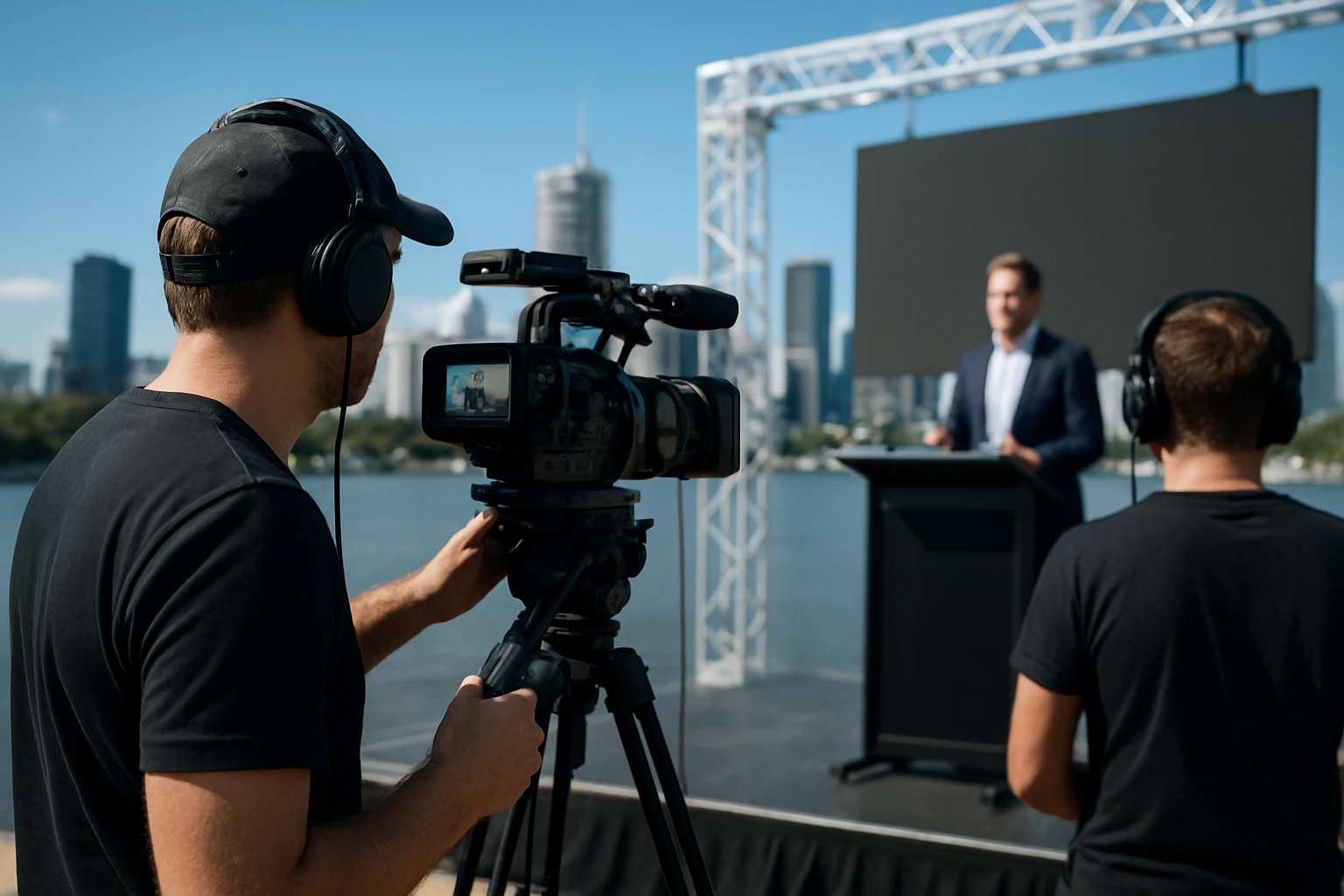
It matters because a professional crew helps remote guests feel included and reduces the risk of technical problems at moments you cannot redo. If the officiant starts speaking, the keynote begins, or a family member reads a eulogy, there is no second take.
How does it help people who cannot attend in person?
Remote viewers need clear audio and stable video to follow speeches, vows, readings, or presentations in real time. That sounds obvious, but it is the difference between feeling present and feeling shut out. A cousin in London can watch the ceremony as it happens. A colleague stuck at Sydney Airport can still hear the keynote. A grandparent in aged care can witness the ring exchange instead of waiting for a phone update later.
In practice, inclusion is built from small choices. Is the camera close enough to see faces? Can viewers hear the celebrant when they step away from the mic? Is there a private link for family members who do not want a public stream? Those details decide whether the event feels welcoming or frustrating.
Why is audio quality so important?
Because viewers will forgive a less-than-perfect shot faster than they will forgive muddy sound. If the picture softens for a moment, people stay with you. If the words drop out during vows, a reading, or an announcement, they stop following the event.
Good audio means more than placing one microphone near the front. It can involve taking a feed from the venue sound desk, adding dedicated microphones for speakers, and monitoring levels live so soft voices do not disappear. In a reverberant church in Toowong or a bright event room with hard walls, that expertise matters immediately.
For weddings and funerals especially, reliability matters more than flashy effects.
Why does local venue knowledge help?
Local knowledge helps crews work around Brisbane venues, access points, and surrounding-region logistics. That means knowing where loading access is, when bump-in is allowed, whether parking is tight, and how long cable runs will be in a heritage hall, hotel ballroom, or suburban chapel.
It also helps with internet and timing. Some rooms in older buildings have awkward signal dead spots. Some venues have in-house AV rules. Some sites in Logan, Ipswich, or Moreton Bay simply take longer to reach than the map suggests on a Friday afternoon. A local crew is less likely to be surprised by that.
How does a Brisbane live stream crew work on the day?
Most crews follow a simple workflow: prepare the venue, run the live show, and secure the recording afterward. The steps sound straightforward. The discipline is in doing each one without rushing.
What happens before the event starts?
Before guests arrive, the crew usually checks power, camera positions, audio sources, and internet options. They confirm what the stream title and viewing link should be, where presenters will stand, and whether any last-minute run sheet changes affect the setup.
- Unload and place gear without blocking guests or staff.
- Set camera angles for the stage, lectern, aisle, or signing table.
- Test microphones, music feeds, and any venue sound desk connection.
- Check the outgoing stream and backup recording.
- Run a final confidence check before start time.
That pre-event check is where many problems get solved quietly. A dead battery. A loose XLR cable. A lectern moved two metres to the left. An internet line that looks fine until several hundred guests arrive and start using their phones. The calm you feel at 9:00 a.m. often comes from work finished at 8:15.
What happens during the live stream?
Once the event starts, the crew shifts from setup mode to live-show mode. Camera operators hold steady shots and follow action. The audio technician watches levels so the quiet speaker and the loud speaker both sound clear. The producer monitors the outgoing feed and switches between cameras so remote viewers see the right thing at the right moment.
This is also when experience shows. If a presenter leaves the lectern, the camera reframes. If a wireless microphone crackles, the crew moves to the backup. If the bride and groom step into a brighter patch of light by a window, the exposure gets adjusted. If audience questions begin unexpectedly at a hybrid event in Milton, the sound plan changes on the fly.
A backup plan is not optional — it is part of the job.
What happens after the event ends?
After the live stream finishes, the work is not over. Many crews keep a local recording as a backup so the event is still preserved if the live connection has problems. They check that the file saved correctly, stop all devices in the right order, and confirm whether you need a replay link, a downloadable copy, or both.
Then comes pack-down. A careful crew does this without turning the exit into a cable obstacle course. For a memorial service, they may wait until the room has thinned out. For a hybrid event, they may need to reset fast for the next session. Either way, delivery matters as much as capture.
What should you ask before booking one?
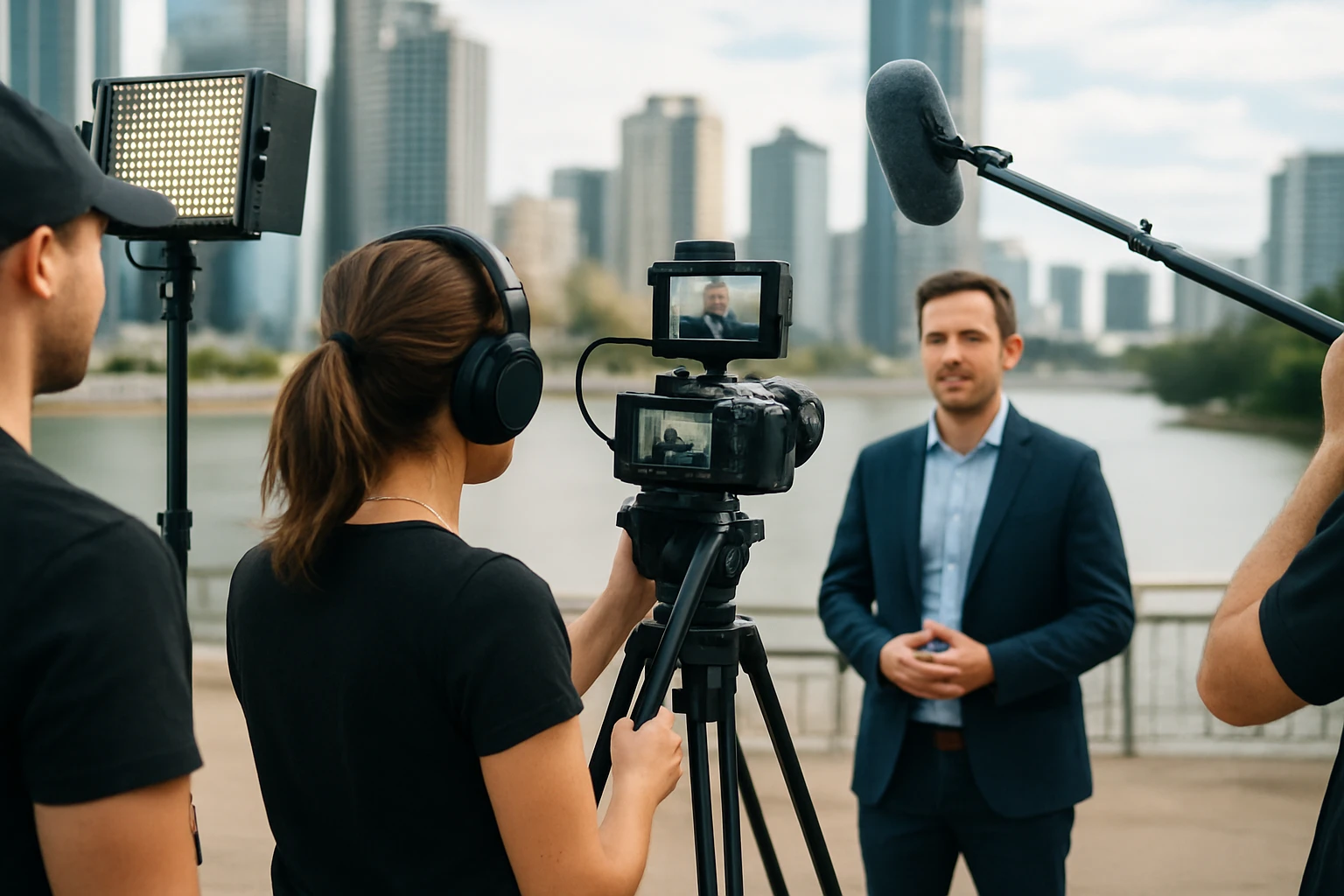
The best booking questions are about venue fit, backup systems, and where the stream will be delivered. You do not need to speak like a broadcast engineer. Plain questions get the best answers.
Can you work with my venue and internet setup?
Ask whether the crew has worked at your venue before, whether they need a site visit, and what internet options they prefer. Some providers are happy with a venue connection if it is stable. Others bring their own backup internet as standard. You should also ask about access times, parking, stairs, and whether the venue has existing sound equipment they can connect to.
If your event is at Brisbane City Hall, a hotel in Spring Hill, or a private property in the Scenic Rim, the answer may differ. That is normal. What you want is a clear plan, not a vague “we’ll figure it out on the day.”
What backup plan do you use if something fails?
This is one of the most useful questions you can ask. You should confirm whether they bring backup internet options and spare equipment. That can include extra cables, spare microphones, a second camera, duplicate recording, and alternate power where needed.
Listen to how specific the answer is. “We always record locally, and we carry spare audio and internet options” is reassuring. “It should be fine” is not. For one-off events like funerals and weddings, you need more than optimism.
If the answer to backup planning is vague, keep asking.
Where will the live stream be shared and recorded?
You can ask whether the crew can stream to platforms such as YouTube, Facebook, or a private viewing link. That choice affects privacy, ease of access, chat features, and what your viewers need to click. A business webinar may suit a private link. A memorial may need a password-protected link. A public ceremony may work well on YouTube.
You should also ask what happens to the recording afterward. Will you receive a replay link the same day? Can the file be downloaded later? How long will it remain hosted? These sound like admin details, but families and event organisers often care about them a lot once the day has passed.
| Question to ask | Why it matters | A strong answer sounds like |
|---|---|---|
| Can you work with my venue? | Prevents surprises with access, audio, and internet | “Yes, and we can check the room layout, load-in, and network options first.” |
| What backup plan do you use? | Protects you from single-point failures | “We bring spare gear, backup connectivity, and a local recording.” |
| Where will the stream be delivered? | Determines privacy, viewer access, and replay options | “We can send it to YouTube, Facebook, or a private link and confirm recording delivery.” |
What are the most common questions about Brisbane live stream crews?
Most people want to know how far crews travel, how early they should book, and whether one team can handle very different events. Those are smart questions because they reveal both logistics and flexibility.
Do they travel outside Brisbane?
Yes, many crews work across Brisbane and surrounding regions, not just the CBD. That can include Logan, Ipswich, Redlands, Moreton Bay, and nearby areas depending on schedule and travel requirements. If your venue is outside the inner city, ask early about travel time, access, and whether a site recce is helpful.
A crew used to moving between a chapel in North Lakes and a hybrid event room in South Brisbane will usually plan bump-in times more realistically than a team guessing from a map.
Can one crew handle weddings, funerals, hybrid events, and other live event streaming?
Often, yes — if they know how to adjust their style. The same crew can handle different event types when they understand that each one has a different rhythm. Weddings need emotional timing and tasteful coverage. Funerals need respect and low visibility. Hybrid events need clean speech, presentation support, and confidence with run sheets.
The equipment may overlap, but the approach should not feel identical. A good crew knows when to stay invisible, when to move quickly, and when to prioritise the room over the stream.
How far ahead should you book?
Booking early is especially sensible for weddings, funerals, and dates with fixed venue schedules. If your date and venue are confirmed, start asking questions. Popular Saturdays in spring fill faster than a midweek event in February, and larger live event streaming bookings often involve venue coordination well before the event.
Funerals are different because lead times can be short. In that case, responsiveness matters more than long-range planning. Ask what information the crew needs right away: venue, time, contact person, expected audience, and whether a private viewing link is required.
The right crew should be able to explain their process in plain English, not technical jargon.
A good Brisbane live stream crew handles the invisible work that lets your event be seen, heard, and safely recorded when the moment only happens once.
They plan the setup, protect the audio, watch the stream live, and keep backups ready — whether you are hosting a wedding in New Farm, a memorial in Mount Gravatt, or a hybrid event in the CBD.
When your date is fixed and your guests are spread across different places, what kind of crew would help you feel calm before the first microphone check?
Plan Calmly With Livestream Company
Local Brisbane-based crew, fast setup, and on-site support help families, businesses, and organisers share weddings, funerals, hybrid events, and live events with clear virtual access across Brisbane and nearby regions.


